A carbohydrate management plan focuses on reducing the amount of carbohydrates in our diet. With this plan, we limit the amount of sugar (sweets), starch (rice, bread, and grains) that we are eating each day. This puts our bodies in a fat burning state and ultimately helps us lose weight.
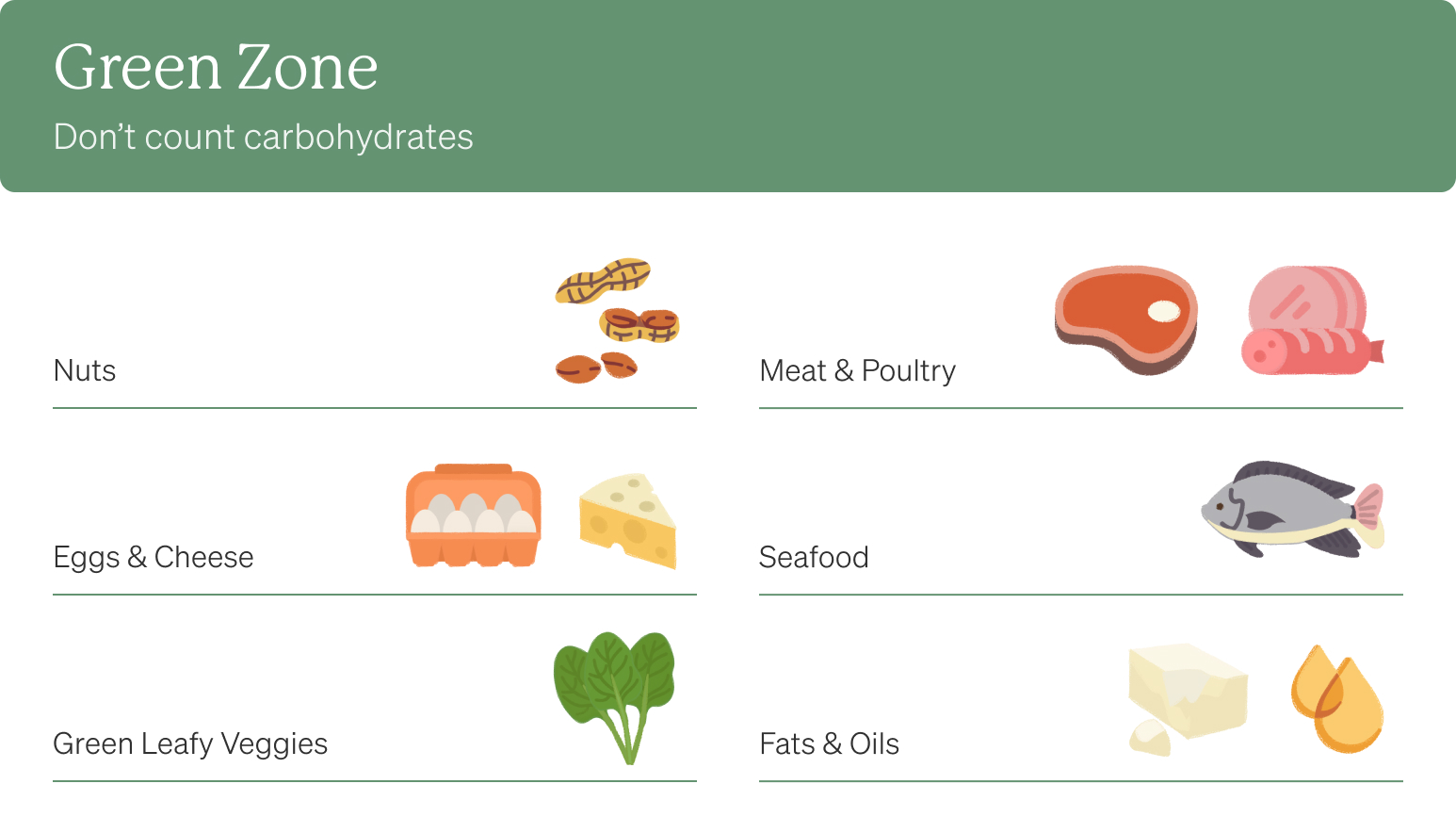
For Green Zone: Choose as much as you like, focusing your meal choices around vegetables, protein, and healthy fats.
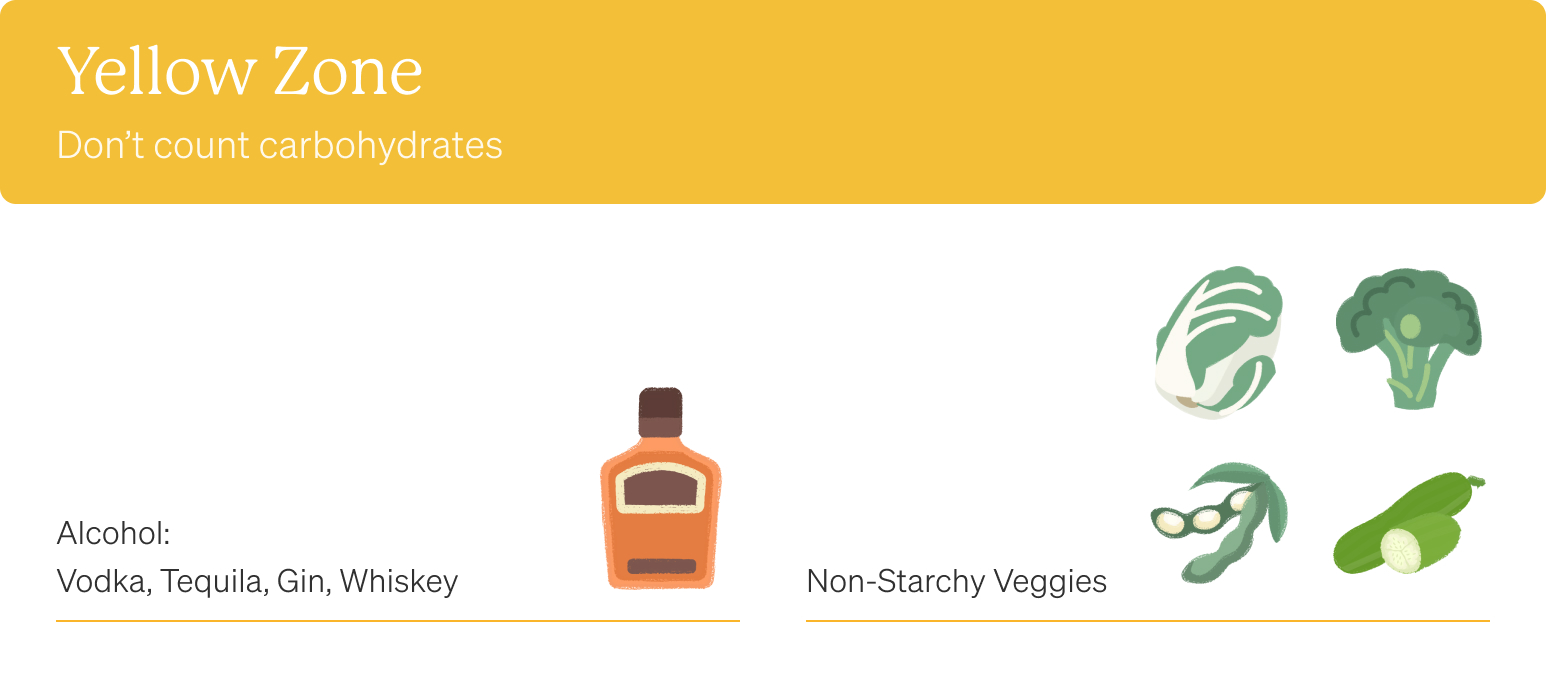
For Yellow Zone: Choose as much as you like, focusing your meal choices around vegetables, protein, and healthy fats.
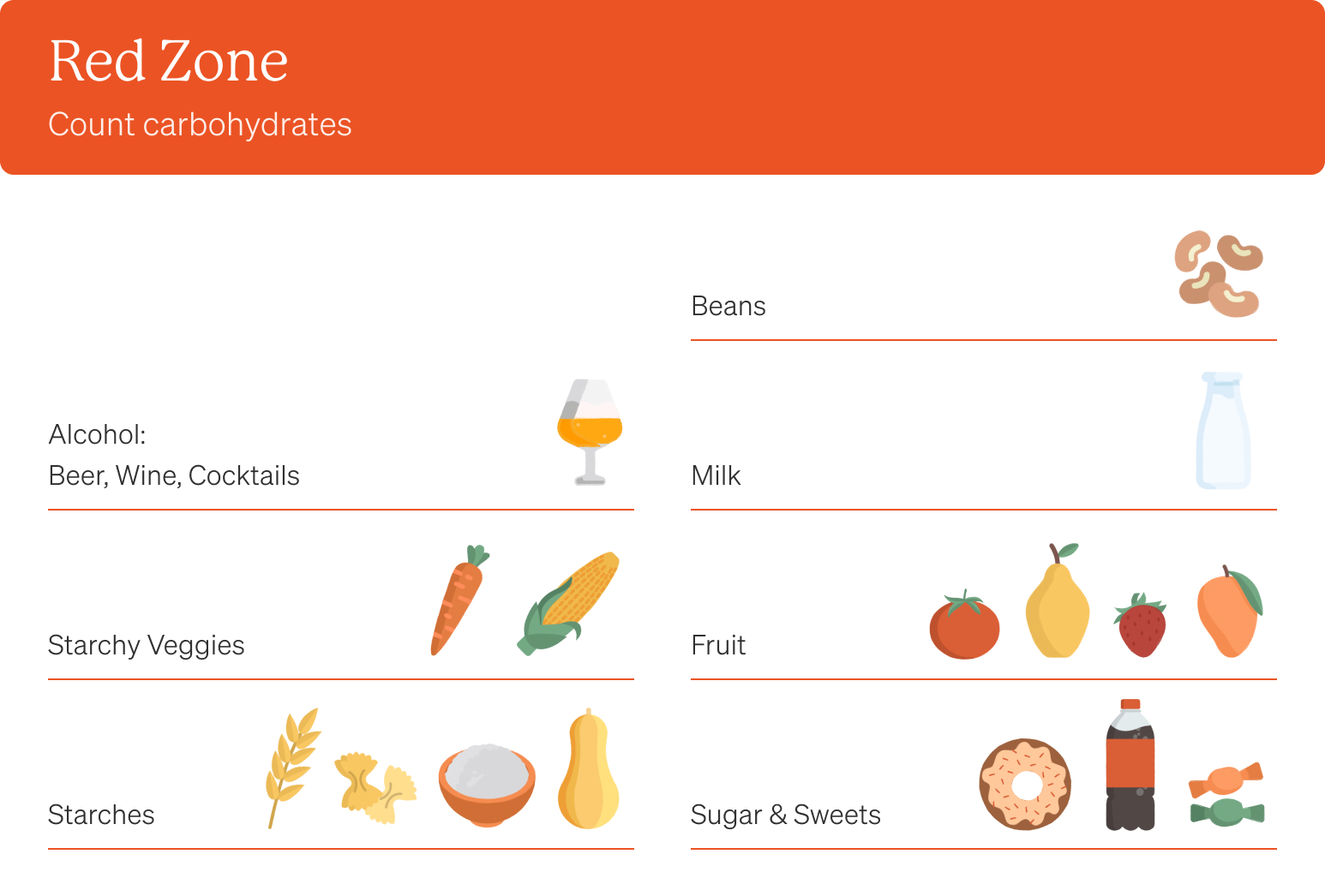
For Red Zone: Limit your total to 20 grams of carbohydrates per day.
Eat when you are hungry, stop when you are satisfied. Do not limit portions or count calories. Eat as much as you like, as long as you follow the guidelines above. If you have any dietary restrictions (vegan, vegetarian) or metabolic conditions (diabetes, high blood pressure), please chat with your Program Analyst for additional guidance.
Track your food guidelines using either a qualitative method or quantitative method.
The qualitative tracking approach does not require you to report exact carbohydrates or any other macronutrients. Instead, you will be asked to report if your meals yesterday were:
- On Plan: was within your daily goal for red zone carbohydrate intake
- Okay: went slightly over your daily goal for red zone carbohydrate intake
- Splurge: significantly exceeded your daily goal for red zone carbohydrate intake
The quantitative tracking approach allows you to report the total amount of red zone carbohydrates you ate the previous day. With this method, you can:
- Log your exact red zone carbohydrate count
- Compare your logged carbohydrate count to your daily goal for red zone carbohydrate intake
- Stay hydrated! Drinking plenty of water is very important on the Carbohydrate Management plan. Aim to drink six or more cups of water a day (1 cup = 8 ounces).
- Plan your meals ahead of time, incorporating ingredients you already have.
- Do your grocery shopping along the outer rim of the store and avoid the packaged products in the center aisles.
- Read food labels to check for low total carbohydrates. Watch out for sneaky carbs in foods like condiments, sauces, dressings, snacks, drinks, etc. Make sure you're tracking total carbohydrates, not net carbohydrates.
- Read food labels to identify healthy (unsaturated) and unhealthy (saturated) fats.
- Prioritize grass-fed meats, wild-caught seafood, and free range eggs.
- Include some type of salad or vegetables with each meal.
- Swap out high carb chips and crackers with on plan options like almonds and sunflower seeds.
- Buy on-plan options you enjoy in bulk and freeze for later use.
Carbohydrates are our bodies’ preferred source of energy. When we eat a diet high in carbohydrates, our bodies produce insulin, a hormone that tells us to use sugar for energy and to store fat. Conversely, when we eat fewer carbohydrates, our bodies produce less insulin, decreasing the amount of energy being stored in our bodies after each meal.
On a carbohydrate management plan, our diet consists of vegetables, proteins, and healthy fats. Fats and proteins signal the production of leptin, which encourages feelings of satiety. This makes it more difficult to overeat.
Acetone scores will vary depending on your unique metabolism, but you should expect them to be 4.0 or greater while limiting red zone carbohydrates to 20grams per day.